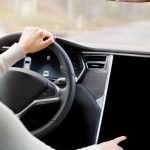

In the latest push to address persistent obstacles for autonomous vehicles, Tesla has introduced a patent designed to tackle sunlight glare for its Full Self-Driving (FSD) system. Many drivers confront glare daily, often turning to sun visors or sunglasses for relief, but camera-dependent systems such as Tesla’s Autopilot and FSD face additional difficulties. This technological move comes as Tesla continues to refine its driver-assist features and customer experience, reflecting the company’s broader ambition to achieve higher levels of autonomy under varying environmental conditions. Tesla’s leadership has previously acknowledged challenges with vision-based navigation, and this new patent signals an active approach toward resolving visibility issues.
Earlier reports about FSD highlighted frequent performance problems under harsh lighting, with users and experts both citing glare as a significant factor in decreased camera accuracy. Alternative solutions have been discussed within the self-driving vehicle sector, including using additional sensors or different filters. However, Tesla has remained focused on improving its existing camera-driven vision, suggesting incremental changes rather than overhauling the sensor architecture. The company’s preference for vision over lidar or radar further underscores the importance of addressing issues such as glare without switching fundamental strategies.
What Is Tesla’s New Patent Proposing?
The patent outlines a camera glare shield constructed with micro-cone arrays. These tiny cone-shaped structures are tailored to scatter incident sunlight, lowering the risk of light overwhelming the cameras. Tesla elaborates that these micro-cones can be optimized by size, angle, and placement to reduce reflectance, aiming for improved object recognition and traffic reading capabilities by the vehicle’s computer systems.
How Will the Micro-Cone System Adapt to Changing Lighting Conditions?
An integrated electromechanical system is detailed in the patent, which allows dynamic adjustment of the micro-cone orientation in response to moving light sources—like the sun at different times of day. This flexibility could let Tesla’s vehicles minimize glare in real time, rather than relying solely on static shielding or post-processing. Tesla describes this innovation as central to enhancing camera performance and, by extension, the safety of its Full Self-Driving suites.
Could There Be Additional Steps to Address Sun Glare?
Tesla is evaluating complementary ideas beyond the micro-cone design, such as using direct photon count processing, neutral density filters, or even heated lens elements in future FSD hardware iterations. During an earnings call, CEO Elon Musk explained:
“We use an approach which is direct photon count. When you see a processed image, so the image that goes from the sort of photon counter — the silicon photon counter — that then goes through a digital signal processor or image signal processor, that’s normally what happens.”
He added:
“And then the image that you see looks all washed out, because if you point the camera at the sun, the post-processing of the photon counting washes things out.”
Hardware revisions such as Hardware 5 and Hardware 6 are under consideration for including additional glare-reduction technologies.
Sun glare remains a primary cause of reduced driving safety, and as automakers depend more on vision-based inputs, solving this problem becomes crucial for autonomy adoption. Competing self-driving developers have tested combinations of alternative sensors, but Tesla’s approach is distinct in its commitment to cameras. For drivers and investors, understanding these technical steps is key to anticipating real-world reliability and regulatory acceptance of fully autonomous vehicles. Future developments may determine whether such incremental innovations can match or surpass traditional, multi-sensor approaches in complex visual environments.