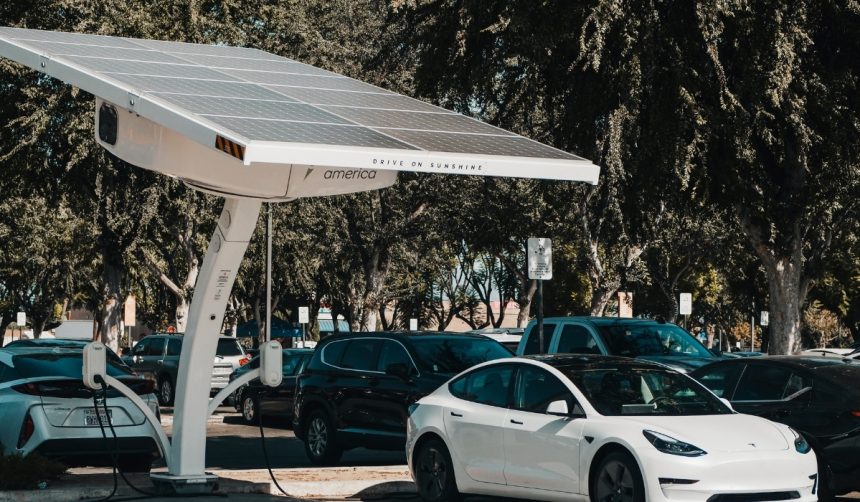

Automated vehicles have sparked heated debates over driving risk and insurance costs, but a new collaboration proposes to rewrite perceptions of both. Lemonade, a digital insurer, has introduced an insurance offering specifically designed for Tesla‘s Full Self-Driving (FSD) software. Targeting early adopters in key U.S. states, Lemonade Autonomous Car Insurance claims to halve rates for those using FSD, citing enhanced safety metrics when the service is active. As autonomous driving options grow in popularity, questions arise on how insurers and technology firms will share data, determine liability, and set fair prices for this swiftly changing landscape.
When Lemonade launched general auto insurance, the focus was on a tech-driven, user-friendly experience, but rates and risk assessments largely mirrored traditional providers. Even as telematics and usage-based insurance developed, programs often relied on third-party devices rather than vehicle APIs. By enabling direct data connectivity via Tesla’s systems, Lemonade hopes to address these limitations and better reflect the risk profiles unique to FSD. Independent reports have observed previous insurance pilot programs around Tesla, but none at a scale that leverages real-time FSD engagement data to this degree.
How Does Lemonade’s FSD Insurance Work?
Lemonade Autonomous Car Insurance uses live driving data collected directly from Teslas when the FSD suite is engaged, eliminating the need for aftermarket telematics hardware. The insurer claims that Teslas operating with active FSD record considerably fewer incidents than vehicles under human control. Unlike competitors that monitor driving behavior using separate sensors or apps, Lemonade’s system draws on vehicle sensor data and performance logs. By doing so, premium calculations can reportedly be updated dynamically, with further reductions possible as Tesla software is upgraded.
What Makes This Offering Different for Tesla Drivers?
Lemonade distinguishes its product by integrating with Tesla’s onboard APIs, which feed nuanced vehicle performance data directly to the insurer. According to Shai Wininger, Lemonade’s co-founder and president,
“Traditional insurers treat a Tesla like any other car, and AI like any other driver. But a car that sees 360 degrees, never gets drowsy, and reacts in milliseconds can’t be compared to a human.”
He further noted the benefits achieved from their proprietary technology stack, stating
“Teslas driven with FSD are involved in far fewer accidents. By connecting to the Tesla onboard computer, our models are able to ingest incredibly nuanced sensor data that lets us price our insurance with higher precision than ever before.”
Where and When Will the New Insurance Be Available?
The rollout starts on January 26 in Arizona, followed by Oregon a month later. Eligibility is limited to Tesla owners who connect their cars to Lemonade’s app, allowing the company to access critical vehicle data—an arrangement not required by many legacy insurers. While the initial offering covers a few western states, Lemonade plans to expand as demand rises and FSD features evolve.
Lemonade’s targeted approach to leveraging FSD in their insurance products may force other insurers to rethink how they assess autonomous vehicle risk. The key differentiator appears to be data granularity and real-time adjustment: instead of assessing risk based on broad categories, Lemonade drills into precise vehicle usage patterns. Drivers considering FSD may find this model financially appealing, though privacy, data sharing, and regulatory compliance will likely draw scrutiny as the rollout continues. As insurers and automakers deepen collaboration, consumers may see more variable, usage-based premiums, particularly for vehicles equipped with advanced self-driving technologies. Whether this shift leads to widespread cost savings or simply new methods of risk segmentation is yet to be seen, but the experiment signals that insurance for automated vehicles is no longer one-size-fits-all.