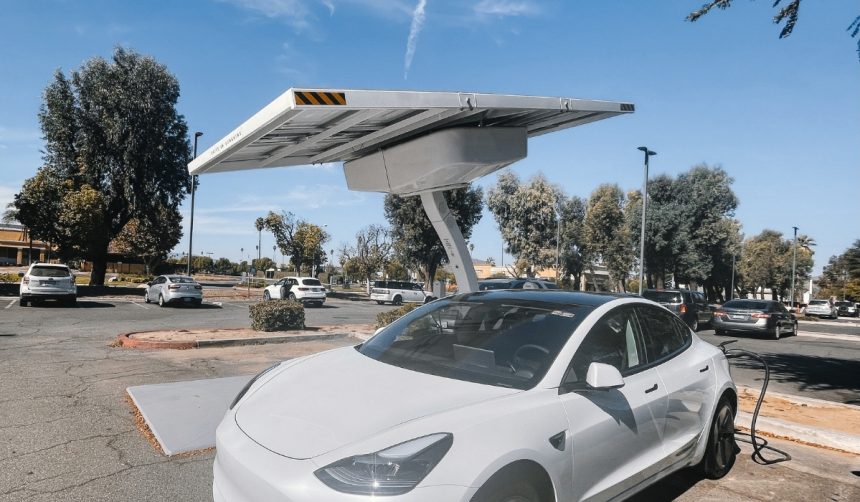

Drivers using public charging stations have often voiced concerns about quickly and safely disconnecting their vehicles in urgent situations. Tesla is introducing the Unlatching Charge Cable function in the United States to address these needs, focusing on user convenience and broad compatibility. The update arrives through Software Update 2026.2.3, targeting the Model 3 and Model Y, both of which have become widely popular among American electric vehicle owners. As electric vehicle charging infrastructure diversifies, ensuring a smooth and safe disconnection process is gaining importance for Tesla users as well as those utilizing third-party chargers.
In markets like Europe, similar features have already been implemented, providing a reference point for what American consumers can anticipate. Early discussions and previous updates rarely covered an integrated physical solution for quick cable release, focusing instead on in-app or touchscreen access. This new step goes beyond software control, integrating a physical action via the car’s rear left door handle, which can offer extra reassurance to drivers, especially at busy or unfamiliar charging sites.
How Does the New Feature Work?
With the latest update, drivers unlock the charge port simply by pulling and holding the rear left door handle for three seconds, provided the car is unlocked and a key is present. This method offers a notable alternative when using third-party chargers not equipped with an unlatch button, such as J1772 or CCS to NACS adapters. The process eliminates reliance solely on the Tesla app or touchscreen commands in urgent moments, potentially making charging stops less stressful. Tesla’s release notes confirm this addition, stating,
“Charging can now be stopped and the charge cable released by pulling and holding the rear left door handle for three seconds, provided the vehicle is unlocked, and a recognized key is nearby.”
Who Can Access This Function Right Now?
Currently, only owners of the Tesla Model 3 and Model Y are able to utilize the new cable release function. Those driving the Model S, Model X, or Cybertruck are not included in this rollout, and there is no set timeline for those vehicles to receive comparable features. Tesla acknowledges the limitation and has not issued details regarding future expansion to its entire lineup, indicating that further hardware or software adjustments may be planned down the line.
Why Might This Be Significant for Third-Party Charging?
For Tesla owners who depend on third-party chargers with different plug types, the update may reduce time spent at stations and offer added security. The situation often arises when connecting to chargers that use J1772 or CCS plugs, which sometimes do not have the same convenient release features as Tesla’s own NACS standard.
“This is especially useful when the charge cable doesn’t have an unlatch button. You can still release the cable using the vehicle touchscreen or the Tesla app,”
Tesla explained in the release information. The added flexibility could particularly help in crowded or less secure environments where drivers might want to minimize distractions while unplugging.
New details in this software update reflect a focus on practical safety enhancements and smoother charging experiences for Tesla owners, beyond prior updates, which had concentrated on in-car software settings or app-based controls only. As third-party EV charging becomes common, hardware-based release functions are likely to see greater demand. Meanwhile, owners of other models may continue to face the inconvenience of app or screen unlocking until the feature expands. The upgrade intersects with broader efforts across the EV sector to simplify charging and address real-world user concerns, not just technical performance.
Drivers interacting with both Tesla Superchargers and non-Tesla stations will benefit most, as reliability and speed in charging procedures can encourage the wider adoption of electric vehicles. While not yet available for Tesla’s complete lineup, the feature signals ongoing attention to customer experience and feedback. U.S. drivers might also anticipate that future iterations will extend similar functions to all Tesla models, potentially standardizing safety and accessibility in EV charging culture. Users should stay informed about software updates, as features like these may impact everyday vehicle management and decision-making on the road.