
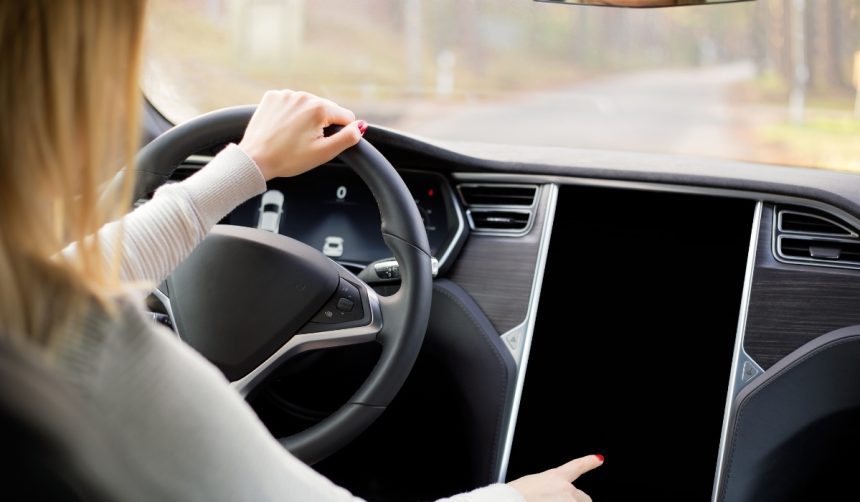

Tesla is solidifying its approach to autonomous mobility by preparing an integrated Robotaxi service, designed to accommodate a broad spectrum of passenger needs. The company’s planned fleet utilizes various vehicle types, allowing for flexibility beyond the highly anticipated two-seat Cybercab. By unifying these vehicles under the same autonomous technology, Tesla aims to streamline future urban transportation and meet shifting consumer expectations while addressing operational efficiency. Industry analysts have suggested that a flexible fleet with diverse sizing could provide more practical solutions for ride-hailing scenarios than a one-size-fits-all vehicle model.
Early discussions of Tesla’s Robotaxi concept typically focused on fully autonomous vehicles as a distant goal and were often limited to speculation about passenger capacity. More recent public statements from Tesla indicate a more concrete plan that leverages existing and upcoming models like Model Y and Robovan. This approach marks a shift from previous ambitions centered on a single vehicle type, reflecting a broadened strategy rooted in real-world transportation data and diverse consumer needs. Compared to past years, the current narrative emphasizes operational readiness and scaling, rather than just technological aspiration.
Why Is Tesla Designing a Two-Seat Cybercab?
Tesla executives revealed that the Cybercab’s two-seat design is driven by travel pattern analyses, highlighting that over 90% of vehicle miles today involve just one or two passengers. Lars Moravy, Tesla’s Vice President of Vehicle Engineering, stated,
“Autonomy and Cybercab are going to change the global market size and mix quite significantly… Over 90% of vehicle miles traveled are with two or fewer passengers now. This is why we designed Cybercab that way.”
These insights have directly shaped the company’s design choices and production expectations for the autonomous fleet.
Can Tesla’s Robotaxi Fleet Adapt to All Passenger Needs?
The Robotaxi service is built on a multi-vehicle platform, allowing Tesla to cover a wide range of passenger demands. While the Cybercab is expected to conduct the majority of rides, the Model Y serves three or four riders, and the Model Y L—pending approval in North America—will address larger family scenarios. For groups of up to ten or more, the Robovan is poised to offer a practical alternative. This structure mirrors current transportation norms where different vehicle types serve specialized roles.
How Will Vehicle Diversity Affect Tesla’s Production Goals?
Elon Musk noted that there is a strong focus on autonomy, with the company planning to manufacture more Cybercabs over time than all other Tesla vehicles combined. He said,
“It’s like this car either drives itself or it does not drive… We would expect over time to make far more CyberCabs than all of our other vehicles combined.”
Tesla’s confidence in scaling up Cybercab production reflects its reliance on steadily advancing autonomous software and efficient manufacturing practices.
Tesla appears to be positioning itself not only as a car manufacturer but as a platform provider for different autonomous transportation solutions. The mix of Cybercab, Model Y, Model Y L, and Robovan indicates readiness to cater to various passenger requirements under one software and service ecosystem. This flexibility could make autonomous ride-hailing accessible to more user groups. While a single-vehicle autonomous service has limitations, combining several models may provide broader coverage and operational stability as the Robotaxi concept matures. Consumers interested in autonomous mobility should watch for how reliability, accessibility, and regulatory challenges are addressed as Tesla gradually deploys its fleet in new markets and urban environments.