
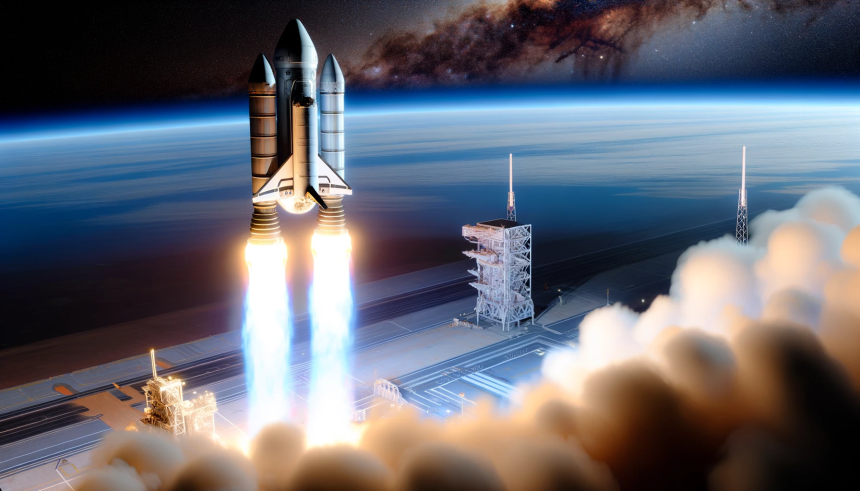
On the cusp of a new era in lunar exploration, NASA prepares to reestablish a human presence around the Moon with its Artemis II mission. The Space Launch System (SLS) rocket and Orion spacecraft stand ready at Kennedy Space Center, as anticipation builds for the first crewed voyage departing from U.S. soil to lunar distance in more than 50 years. This mission not only reignites American crewed lunar missions after decades but also signals a renewed global interest in lunar activities. With new safety tests and hardware reviews underway, the agency demonstrates cautious optimism as it manages lingering propulsion system challenges ahead of an earliest possible launch in March.

NASA’s lunar activities under the Artemis banner have evolved through various phases in recent years. Earlier coverage emphasized delays and cost overruns, while new developments revealed consistent support for commercial lander partnerships and updated mission timelines. The initial Artemis I in 2022 successfully validated core systems without astronauts, but the spotlight now shifts to human spaceflight capabilities. Compared to original target dates, current schedules show incremental but steady movement despite logistical and technical issues, reinforcing the program’s long-term nature amidst growing international and private sector interest.
Who Makes Up the Artemis II Crew?
Four astronauts will make the journey: Reid Wiseman as mission commander, Victor Glover as pilot, and Christina Koch and Jeremy Hansen as mission specialists. Notably, this team includes Hansen—a first for Canada on a lunar mission—bringing multinational representation to the mission. Koch and Glover’s participation also marks the first time both a woman and a person of color are slated to travel this far from Earth. All crew members are selected for their experience and past missions in orbit, with Wiseman, Glover, and Koch having logged flight time on previous NASA and SpaceX Crew Dragon missions.
How Are NASA and Its Commercial Partners Preparing?
NASA is conducting final checks on the integrated SLS rocket and Orion vehicle after a propellant-loading test revealed a liquid-hydrogen leak. The agency is focused on system repairs and gathering additional data to ensure safe launch operations. Alongside NASA’s preparation, contractors like SpaceX and Blue Origin are developing lunar landers—SpaceX for the maiden crewed mission under a $2.89 billion contract, and Blue Origin for future Artemis missions following a $3.4 billion deal. NASA officials note,
“We are working diligently through each step to address issues as they arise and prioritize safety,”
while emphasizing the collaborative aspect of this endeavor.
What Comes Next in the Artemis Program?
Artemis II will serve as a critical demonstration of human spaceflight systems on a lunar trajectory, setting the stage for Artemis III—planned as the next crewed lunar landing. Future missions, including Artemis IV and V, are designed to support extended stays and increased commercial involvement through infrastructure expansion. The agency affirms its commitment, stating,
“Our sights are on long-duration lunar missions, building the foundation for deep space exploration,”
highlighting ambitions beyond the Moon.
SLS, NASA’s most powerful rocket, distinguishes Artemis launches with infrequent but robust missions targeting lunar payloads. While SpaceX’s Starship prototype, currently undergoing development and testing, is expected to offer even greater power and capacity, SLS remains the current mainstay for NASA’s deep space ambitions. These vehicles underpin not only Artemis II but also the broader vision of human expansion into the solar system.
As other nations pursue lunar landings and private companies accelerate innovation, Artemis II stands at the center of renewed competition and cooperation in lunar exploration. Readers interested in space policy, technology, or international collaboration should note that NASA’s cautious yet persistent approach aims to balance ambition with safety and reliability. Those following Artemis missions can expect timeline adjustments, given the complexity of new technologies and the unpredictable nature of deep space operations. Learning from each step, the program seeks to lay groundwork not just for returning to the Moon, but for what follows in decades to come.