
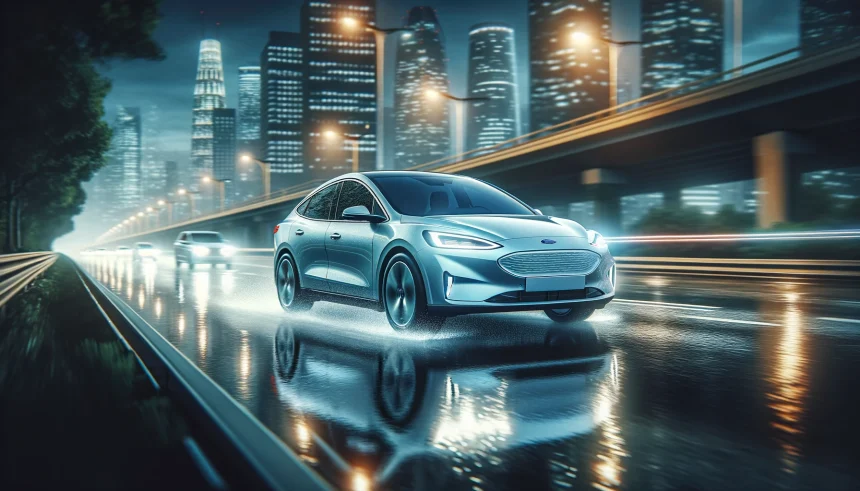

Ford is shifting course after investing years and billions into its electric vehicle ambitions, announcing it will discontinue production of the F-150 Lightning and take a significant write-down on its electric programs. Consumers and investors are watching closely as the automaker repositions itself, raising questions about future electric pickup trucks and broader electric vehicle development. Ford’s move comes as the electric vehicle market faces uncertainty, with supply chain disruptions and fluctuating demand challenging automakers worldwide.
Ford’s latest decision follows several years of optimistic targets for the F-150 Lightning, with initial projections suggesting sales of up to 150,000 units annually. Sales numbers, however, peaked at only 33,510 units in 2024, a far cry from expectations. Other news outlets previously highlighted Ford’s aggressive expansion plans for electric mobility and compared the Lightning’s technology against rival trucks. However, high battery costs and supply constraints stifled momentum, leaving Ford to reassess the long-term sustainability of its all-electric pickup strategy.
Why Did Ford Retreat from the F-150 Lightning?
Sluggish sales, operational losses, and underestimated hurdles contributed to Ford’s decision to halt F-150 Lightning production. The company acknowledged that initial marketing efforts, such as dramatic towing demonstrations, were met with buyer disappointment concerning range while towing, despite the truck’s advertised capabilities.
“The Lightning is actually better than the gas version of the F-150 in pretty much every other way,”
Sam Abuelsamid, Vice President of Market Research at Telemetry, said, reflecting on the vehicle’s overall performance versus its gasoline counterpart.
How Did Market Conditions Impact Ford’s EV Plans?
External factors intensified Ford’s challenges. The debut of the F-150 Lightning in 2022 coincided with global disruptions like the war in Ukraine, which drove up nickel prices—a key battery material—resulting in higher manufacturing expenses. Ford subsequently raised F-150 Lightning prices, which tempered customer demand further. Internal cost pressures from rapid ramp-up and shared platform components added complexity, making it difficult for the Lightning to achieve profitability alongside Ford’s mainstay gas-powered F-150.
What Is Ford’s Next Move in Electrification and Energy Storage?
To adapt, Ford is now focusing on hybrid models and extended-range electric vehicles (EREVs), and is redirecting certain battery production toward the energy storage needs of A.I. data centers.
“The data center bet, in general, is not a bad idea. Ford has a battery factory, and there is an absolutely huge demand for energy storage systems from data centers,”
Abuelsamid noted, while highlighting the significant risk that comes with retooling factories for new battery chemistries and the possibility of market changes before production resumes.
Ford faces a transition period as it navigates tariffs and retooling delays for its battery plants. Its move mirrors those by other players like LG Energy Solution, which has also shifted focus from EV batteries to energy storage for data centers. The automaker has yet to announce specific release dates for its next wave of electrified trucks, raising questions about competition with established electric and hybrid trucks and whether the new strategy can regain lost ground with consumers seeking sustainable commercial vehicles.
Ford’s discontinuation of the F-150 Lightning reflects not just changing buyer sentiment but also structural pressures in the electric vehicle landscape. Quick scale-up in production, paired with volatile costs for raw materials, proved difficult to overcome. Automakers seeking to expand their range of electric or hybrid models should consider the importance of aligning realistic performance expectations and building flexible supply chains. Companies moving some battery production toward data center and energy storage markets may reduce immediate risks but face different long-term uncertainties. Consumers interested in electric trucks can expect a broader mix of options as manufacturers readjust their portfolios, though delivery timelines for next-generation models remain uncertain.