

Las Vegas drew global attention with CES 2026, where industry leaders pitched their latest advances in autonomous vehicle technology. Among conversations on the show floor, speculation ran high about whether Tesla’s efforts in self-driving architecture would remain forward of competitors as new products like NVIDIA’s Alpamayo and advancements from Mobileye entered the scene. Recent developments have reignited debate among market watchers on timelines for true parity in driving automation. Some noted visible progress in the sector, while others, looking back at previous years, observed that certain established names are formalizing strategies Tesla adopted over a decade ago.
Other reports about Tesla’s progress on autonomous driving have been less conclusive, often suggesting rivals were on the brink of catching up or even inventing alternative technical pathways. However, the narrative at CES 2026 focused more on the industry acknowledging Tesla’s lead rather than challenging it directly. Both NVIDIA and Mobileye were noted for releasing platforms that matched Tesla’s earlier hardware concepts, yet timelines for deployment remain extended compared to Tesla’s current Full Self-Driving (FSD) stack.
What Signals Did CES 2026 Send About Tesla’s Strategy?
Analyst Philippe Ferragu described CES 2026 as a significant moment for the industry’s stance on autonomous vehicles, observing that competitors are now following milestones established earlier by Tesla. He remarked,
“CES 2026 = The Great Validation Chamber for Tesla. The industry isn’t catching up to Tesla; it is actively validating Tesla’s strategy… just with a 12-year lag.”
According to Ferragu, Mobileye’s emphasis on affordable L2+ hardware was a departure from the previously sought L4 autonomy, signifying a shift toward cost efficiency over radical innovation.
How Do New Platforms Like NVIDIA’s ‘Alpamayo’ Factor In?
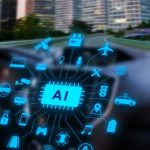
NVIDIA introduced ‘Alpamayo,’ which leverages artificial intelligence to speed up development of autonomous systems. Ferragu noted that this platform supports strategies Tesla pioneered, in particular with FSD V13/V14, but he cautioned that car manufacturers still need to effectively deploy these platforms across their models. He added,
“Nvidia provides the kitchen (chips/models), but legacy OEMs still have to cook. Good luck with that.”
Can Competitors Narrow the Gap With Tesla Soon?
Despite advancements launched at CES 2026, Ferragu assessed that the industry as a whole lags approximately twelve years behind Tesla’s current state. Elon Musk echoed similar sentiments, suggesting that while new players might bring competitive tension, achieving consistent, high-reliability full self-driving remains complex. Musk highlighted the significant challenge in refining systems from a “99% solution” to fully addressing the rare scenarios that true autonomy demands, predicting rivals such as Alpamayo may begin to put pressure on Tesla in five or six years.
For individuals tracking the development of autonomous vehicle technologies, CES 2026 offered concrete examples of how widespread industry strategies have adopted approaches first demonstrated by Tesla. The introduction of cost-efficient L2+ hardware and expansion of AI-empowered driving stacks indicate that while competitors are not stagnant, matching Tesla’s combination of software leadership and integration may take substantial time. Those eager to witness an autonomous driving market shakeup may have to wait until barriers beyond hardware, including regulatory and real-world reliability, are overcome. As companies like NVIDIA and Mobileye continue to refine their systems and standardize features across more vehicles, consumers and investors should look for practical launch dates and measurable, real-world testing data as signals of real competitiveness rather than theoretical capability.