
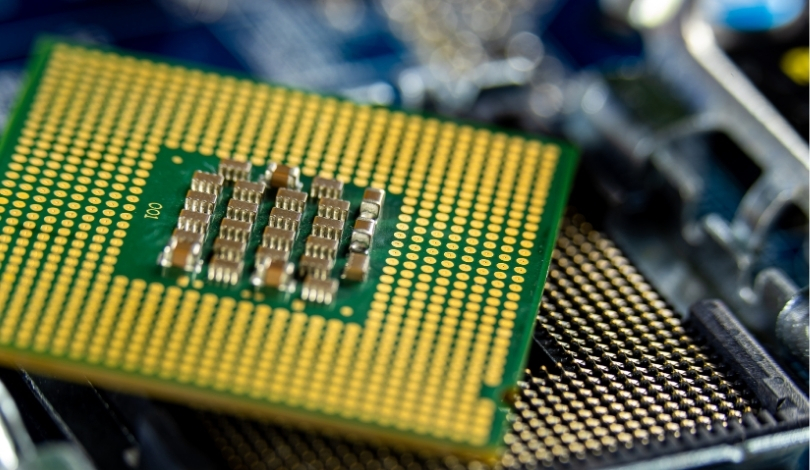
The surge in video game realism and the widespread adoption of artificial intelligence have created fresh pressures on hardware manufacturers to keep pace with increasing memory demands. Vital components like video RAM drive the performance for both modern games and AI models, yet their capacity has struggled to grow as rapidly as data needs. Micron, a prominent memory chip maker, unveiled a new generation of GDDR7 video RAM, aiming to address these growing challenges. Observers in both tech and gaming communities expect this advancement to impact workstation, server, and PC graphics markets in the months ahead.

Recent developments from other industry players have tried to boost VRAM speeds or expand capacity, but past solutions were hampered by higher power draw or cost. In contrast, Micron’s latest product emphasizes lower energy consumption alongside faster processing. Previous generations of GDDR6 memory were quickly surpassed by expanding game and AI assets, prompting demand for a new solution with more bandwidth. This reveals how increasing texture detail in games and model complexity in AI have continuously outstripped what traditional memory can offer, leading to performance bottlenecks for both gamers and professional users.
What Sets the New GDDR7 Apart?
Micron’s GDDR7 brings transfer rates up to 32Gbps, compared to its GDDR6 predecessor’s 24Gbps. This leap in bandwidth translates to improved loading of larger AI models and more detailed gaming assets, making the experience smoother for professionals and consumers alike. Micron highlighted the technical improvements by stating,
“GDDR7 enables lightning-fast speeds while maintaining power efficiency, letting developers and end-users push their creative boundaries,”
emphasizing both speed and efficiency as key features.
How Will It Impact Gaming and AI?
The higher bandwidth and energy efficiency offered by GDDR7 will allow developers to design more complex assets without facing as many memory limitations. For the gaming sector, this means increased fidelity and realism in upcoming titles. AI companies can also leverage this memory to train and deploy larger models, unlocking more sophisticated applications. As Micron explained,
“The enhanced memory capacity and efficiency directly improve both gameplay and professional workloads,”
highlighting cross-industry benefits from this innovation.
Which Hardware Makers Are On Board?
Micron announced that leading graphics card manufacturers, including NVIDIA and AMD, are among the early adopters. These firms are expected to integrate GDDR7 into upcoming product lines, potentially accelerating consumer access to the new technology. This collaboration reflects industry-wide recognition of the need for higher-performing memory, as hardware partners aim to deliver smoother gaming and computing experiences through their next-generation GPUs.
Market analysts point out that future applications—such as 8K gaming, real-time ray tracing, and larger-scale neural networks—will increasingly rely on rapid advancements in video RAM technology. While the previous GDDR6 standard provided temporary relief, long-term needs require memory that can keep up with constantly increasing asset complexity and expanding model sizes. Upgraded memory also impacts adjacent areas, such as data center infrastructure and cloud-based gaming, where speed and efficiency directly shape user experiences and operational costs. Understanding these evolving requirements can help both consumers and industry insiders anticipate upcoming hardware cycles and make informed technology investments.