
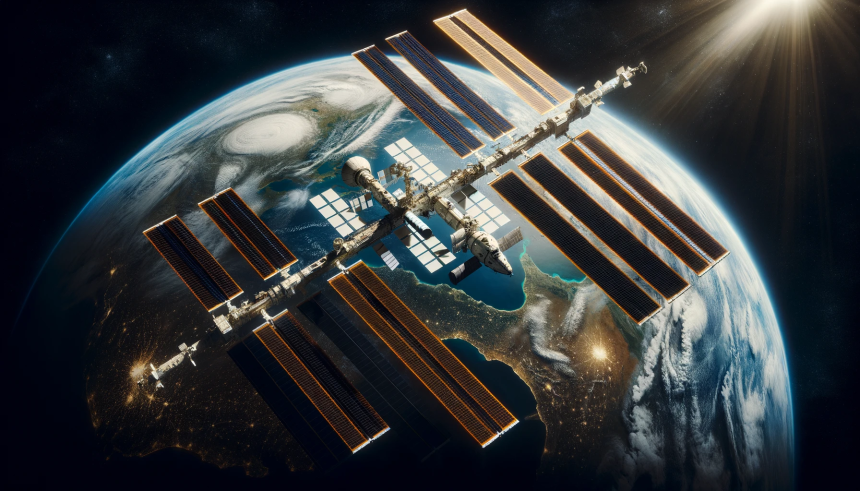
In a move set to challenge the technical limits of in-space robotic operations, Motiv Space Systems and PickNik Robotics have formed a new partnership to support NASA’s Fly Foundational Robotics (FFR) mission. The agreement centers on developing advanced software and manipulation technologies that could eventually reshape on-orbit servicing, assembly, and manufacturing. Teams from both companies will provide flight and ground software tools, aiming to validate complex robotic tasks in the harsh conditions of low Earth orbit. If successful, this mission may redefine how robotics support ongoing and future space infrastructure projects. Mutual trust in each company’s core strengths has paved the way for this collaboration, as PickNik and Motiv look to blend their past experiences with emerging aerospace challenges.

Motiv Space Systems and PickNik Robotics have previously established a track record in robotic systems for space agencies, collaborating on projects requiring reliable performance in unique environments. Similar agreements between these companies and international space agencies such as JAXA have focused on specific challenges like payload management on the International Space Station. Differences in mission planning, hardware adaptation, and software integration have shaped past efforts. However, the FFR mission emphasizes real-time motion planning, simulation, and a modular software approach, marking a distinct step forward from earlier joint projects. Furthermore, the presence of MoveIt Pro and Space ROS represents a significant shift towards modularity and interoperability, targeting the broader goals of in-space servicing and assembly.
What Are the Key Objectives of the FFR Mission?
The FFR mission is designed to demonstrate new levels of autonomous robotic manipulation while also incorporating ground-supervised tasks. NASA aims to collect valuable data and experience that will inform future initiatives related to the In-space Servicing, Assembly, and Manufacturing (ISAM) strategy. To achieve this, Motiv Space Systems is supplying the robotic manipulation hardware, while PickNik Robotics is responsible for developing motion control software based on the MoveIt Pro platform, which will tackle mission planning, simulation, and safe execution of robotic movements within spaceflight restrictions.
How Will Advanced Software Support These Robotics Efforts?
A customized version of Space ROS will underpin the software ecosystem for the FFR project. Space ROS is an adaptation of the popular open source Robot Operating System (ROS) that has been tailored for space environments. PickNik is contributing integration solutions with Astro Digital, the provider of the orbital platform, and delivering a ground control terminal powered by MoveIt Pro. These systems aim to facilitate thorough testing, simulation, and digital twin diagnostics prior to launch, while also supporting active monitoring and operational review during the mission timeline.
What Are the Anticipated Outcomes for Robotic Space Missions?
NASA hopes that the FFR campaign will yield operational insights and lessons applicable to future robotic servicing missions. PickNik and Motiv are preparing tools and frameworks intended to enable long-duration robotic activity, even in scenarios with limited or disrupted communication. According to Chris Thayer, CEO of Motiv Space Systems,
“The Fly Foundational Robotics mission is a critical step toward demonstrating state-of-the-art flight robotic manipulation capabilities that can enable a sustainable and scalable ISAM economy.”
This statement reinforces the emphasis on practical demonstration over purely theoretical development. Meanwhile, Dave Coleman, chief product officer at PickNik Robotics, stated,
“FFR is an exciting opportunity to apply MoveIt Pro’s commercially available motion-planning software to the unique challenges of on-orbit operations.”
Both PickNik and Motiv have leveraged their earlier work with government agencies to refine their products and services for use in aerospace contexts. Their recent collaborations on solutions such as JAXA’s multi-armed robotic system for the International Space Station and NASA’s COLDArm for lunar conditions have honed their readiness for the FFR mission. Integration with industry standards, including modular software architecture and digital twin analysis tools, underscores their continued commitment to reliability and safety in orbital operations.
The partnership between PickNik Robotics and Motiv Space Systems addresses important technical barriers in robotic manipulation for space, with software like MoveIt Pro and Space ROS playing a foundational role. For those in space technology and engineering, the FFR mission offers an opportunity to observe how reconfigurable software and cross-organization collaboration can streamline mission planning, ground simulation, and in-orbit deployment of robotics. These developments may reshape strategies for future in-space servicing, offering new perspectives on cost-efficient satellite maintenance and flexible mission architectures. Readers interested in robotics, AI, and aerospace development will find that the tools and lessons from FFR could soon become staples across the global space industry.