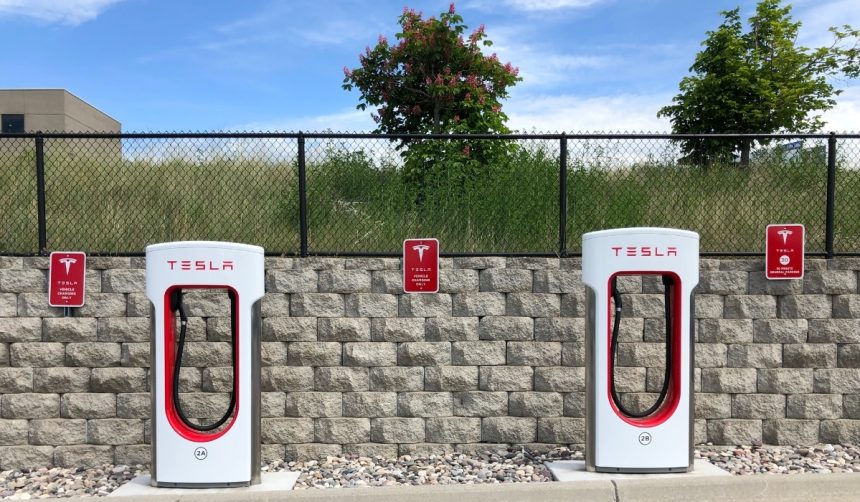

Union tensions have surfaced at the newly opened Tesla Megapack Supercharger in Arlandastad, near Stockholm, with questions emerging about how energy is supplied to the station. Workers commuting through the area and Tesla owners have voiced curiosity about the latest charging arrangement, as the site uses a Megapack battery on location instead of connecting directly to the power grid. This setup diverges from typical practices in Sweden, adding another layer of complexity to ongoing labor disputes with Tesla. Local labor organizations are challenging the legality of the site’s power supply, suggesting it may circumvent established regulations.
Earlier reports discussed extended union blockades that delayed or limited Tesla’s charging network expansion in Sweden, referencing direct disputes between Tesla and Swedish unions over collective bargaining. Previously, most criticism centered on labor practices and delivery of replacement license plates, while technical aspects of energy supply had not received the same degree of scrutiny. Compared to those events, current developments show a shift among unions from labor and work conditions to regulatory and legal frameworks, amplifying their dispute through new channels such as Sweden’s energy regulator. This evolving strategy widens the impact, potentially influencing the wider electric vehicle infrastructure sector.
Why Are Unions Questioning the Megapack Supercharger’s Electricity Supply?
The central issue concerns the way Tesla’s Megapack Supercharger draws power; it operates with an on-site battery, rather than the standard grid connection hampered by union actions for nearly two years. Electricity for the battery arrives from a nearby provider, whose identity remains undisclosed. Trade union IF Metall has submitted a formal report to the Energy Market Inspectorate, seeking clarity on whether this supply arrangement adheres to legal requirements on electricity trading and permits.
Are Legal Actions Being Pursued?
Both IF Metall and the Swedish Electricians’ Association are actively reviewing whether grounds exist for a police report. The electricians’ union has examined the cabling and documented its origin, tracing it back approximately 500 meters to a neighboring property. Coordination continues between the two unions as they explore possible legal violations and regulatory noncompliance.
How Has Tesla Responded to the Scrutiny?
Tesla has not issued an official public statement regarding the unions’ concerns or the Megapack Supercharger’s energy supply. Union representatives emphasized their position, with Peter Lydell from IF Metall explaining,
“The legislation states that only companies that engage in electricity trading may supply electricity to other parties. You may not supply electricity without a permit, then you are engaging in illegal electricity trading. That is why we have reported this…”
The Swedish Electricians’ Association also expressed ongoing support for union actions, as noted by Tomas Jansson:
“We have a close collaboration with IF Metall, and we are currently investigating this. We support IF Metall in their fight for fair conditions at Tesla.”
Sweden’s regulatory investigations into the Tesla Megapack Supercharger add a layer of complexity to existing labor disputes. As the country has become a focal point for clashes over working conditions in the global electric vehicle market, the unions’ focus on permitting and legal frameworks signals a tactical adaptation. Rather than focusing solely on employment contracts, labor organizations are questioning technical and regulatory aspects of electric vehicle charging stations. For Tesla, the development highlights the various logistical and regulatory hurdles electric vehicle infrastructure may face in regions with strong labor traditions and specific permit requirements. Businesses involved in EV infrastructure development in similar environments may benefit from thoroughly understanding local regulations on electricity trading, labor relations, and technical compliance before operating alternative energy setups.