
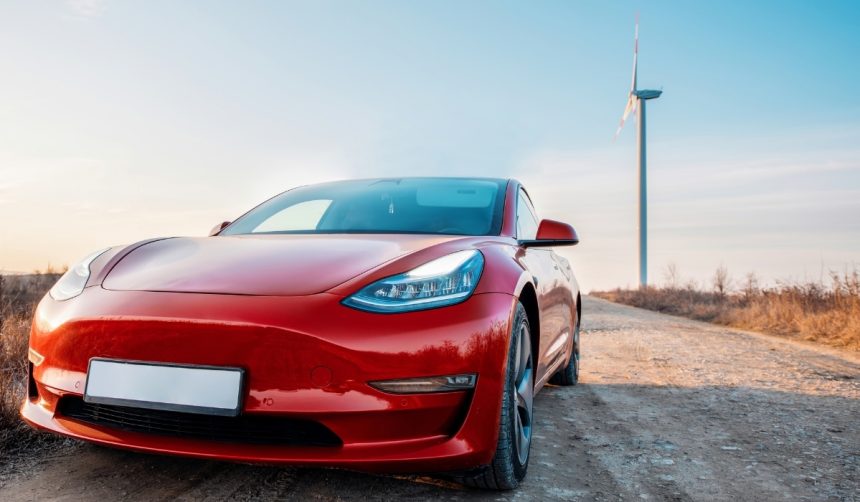

Tesla published its fourth quarter and full-year 2025 production and delivery numbers, offering investors a detailed look into both the company’s performance and future trajectory. Against the backdrop of increased attention toward artificial intelligence and autonomous driving, Tesla continues to adapt to a challenging market landscape. Market watchers noted the narrow gap between actual deliveries and consensus expectations, highlighting how the company is working to balance its traditional vehicle business with new ventures, such as the Cybercab and energy storage initiatives.
Previous coverage on Tesla’s quarterly delivery reveals that expectations for consistent growth have often been met with reality checks due to production bottlenecks and shifting consumer incentives. Compared to earlier reporting, the focus has shifted from vehicle delivery numbers alone to include the growing weight of Tesla’s ambitions in artificial intelligence, autonomous transport, and energy solutions. Performance forecasts have tended to fluctuate as analysts weigh these longer-term projects against short-term sales data. The company’s own posted consensus figure reflects transparency not always seen in earlier years, offering a baseline by which investors can measure progress and setbacks.
How Did 2025 Delivery Figures Stack Up?
Tesla reported delivering 418,227 vehicles in the fourth quarter and 1,636,129 for the full year, falling about 4,000 units short of its posted consensus target for 2025. Despite missing this internal benchmark, some analysts expressed relief that these results were stronger than certain pessimistic forecasts. The company also produced 1,654,667 vehicles over the year, demonstrating steady output even as consumer incentives such as the U.S. $7,500 tax credit began to phase out.
What Role Are AI and New Products Expected to Play?
Tesla has increased its strategic focus on artificial intelligence, Robotaxi, and the Cybercab, aiming for large-scale production to commence in 2026. Energy storage deployments reached 46.7 GWh for the year, pointing to continued progress in diversifying revenue streams. Dan Ives, an analyst at Wedbush, commented,
“This will be viewed as better than feared deliveries and a step in the right direction for the Tesla story heading into 2026.”
He further stated,
“The company has started to test the all-important Cybercab in Austin over the past few weeks, which is an incremental step towards launching in 2026 with important volume production of Cybercabs starting in April/May.”
Are Delivery Numbers Still the Primary Focus for Investors?
Tesla’s delivery numbers, once seen as the leading indicator of its financial health, now compete with other metrics in the eyes of analysts and investors. With Full Self-Driving technology, the Optimus robot, AI research, and the Cybercab, Tesla signals that future growth could derive more from technology-driven ventures than from car sales alone. Nonetheless, deliveries remain a crucial point of reference, though their dominance as a metric appears to be waning in significance amid this broader focus.
Shifts in Tesla’s business model are shaping market perceptions and guiding investment decisions. While maintaining a $600 price target and an ‘Outperform’ rating, Wedbush and Dan Ives continue to track not only sales but also the tangible development of AI and autonomous transportation systems. For those watching the company, understanding how these new business lines will impact long-term revenue streams is vital. The company’s experience demonstrates that while vehicle delivery statistics often capture headlines, a nuanced perspective is needed to appreciate the interplay between Tesla’s established automotive arm and its expanding suite of technology products. Investors, analysts, and customers alike benefit from considering the company’s multi-faceted strategies and how they shape both risk and opportunity as Tesla navigates an evolving global market.