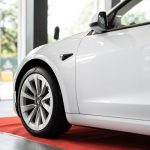



Tesla has announced the arrival of the Model Y Standard Long Range RWD in the European market, signaling another step forward for the brand’s electric crossover lineup. Making its debut through Tesla Europe & Middle East’s official social media channels, this new variant focuses on extending driving range and efficiency for customers searching for practical electric mobility. With consumer preferences shifting toward vehicles that provide both cost-effectiveness and advanced technology, the addition highlights Tesla’s strategy to broaden its appeal across the continent. Electric vehicle adoption continues to climb, and this launch responds to the growing demand for accessible, long-range models.
The Model Y has been a subject of consistent interest since its launch, often compared to other electric SUVs in the segment such as the Volkswagen ID.4 and Hyundai Ioniq 5. While the rear-wheel drive version was available in select regions before, the emphasis now moves to a wider European rollout with notable efficiency improvements. Earlier reviews highlighted the Model Y’s practicality and strong charging infrastructure, yet some customers expressed concerns about pricing tiers and long-range options. The latest addition appears to address these factors, aiming to balance value and technological features while maintaining competitive performance against rivals.
What Makes the Model Y Standard Long Range RWD Stand Out?
The Model Y Standard Long Range RWD delivers a WLTP-rated range of 657 kilometers and boasts a cargo capacity of 2,118 liters. As the most efficient Model Y to date, it consumes just 12.7 kWh per 100 kilometers, further appealing to buyers conscious of running costs. Tesla has also equipped this new variant with the latest AI4 computer hardware, which is expected to support future updates like Full Self-Driving capabilities. The company stated,
“Model Y Standard Long Range RWD now available in Europe – 657 km of range (WLTP) – 12.7 kWh per 100km (our most efficient Model Y to date!) – 2118l cargo volume”
This example illustrates their focus on both efficiency and practicality.
How Does Pricing Compare to Competing Electric SUVs?
The new Standard Long Range RWD variant positions itself at a lower price point within the Model Y range, enabling a broader customer base to consider Tesla’s offerings without compromising on range. The introduction of this model allows it to meet or undercut the pricing of other competitors in the mid-size electric SUV category, including the Peugeot e-3008, the Ford Mustang Mach-E, and the Audi Q4 e-tron. Tesla emphasized the competitive edge it brings, saying,
“The introduction of the Standard trim brings the Model Y in line with the entry price of most of its closest competition.”
This move could boost Tesla’s standing in a market segment where affordability and practicality often influence purchasing decisions.
What Reception Has the New Model Y Received?
Early reviews, such as one from Top Gear, have pointed out that while the Model Y Standard Long Range RWD features a simpler interior, it manages to maintain key elements such as a robust infotainment system, generous interior space, and practical real-world range. The review also noted that this Tesla trim remains competitive in terms of features and driving experience, even with cost-related adjustments. Feedback from industry analysts and reviewers appears cautiously optimistic, acknowledging the effort to balance value and performance in an increasingly crowded market.
Buyers interested in electric vehicles are often concerned with both range and entry price, two areas addressed by the new Model Y Standard Long Range RWD. European consumers who prioritize cargo space and long journeys may find the updated offering more suitable, especially as competition tightens with brands like Peugeot, Audi, and Ford. Careful comparison of charging infrastructure, software update readiness, and overall ownership costs remains essential for shoppers evaluating the growing number of electric SUVs in Europe. With expanding choices and technical advancements, consumers stand to benefit from increased value and targeted solutions for their mobility needs.