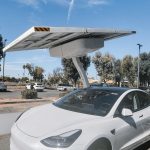

An ongoing labor dispute in Sweden continues to impact Tesla’s Supercharger expansion, as a key charging site in Ljungby remains disconnected from the power grid following a court decision. The conflict has stalled not only Supercharger operations but has drawn fresh attention to the broader implications of industrial actions on international companies’ infrastructure projects. Stakeholders in Sweden’s energy and labor sectors now observe the unfolding situation for signs of precedent amid escalating tension. Tesla’s growing presence in European markets adds urgency to the matter, as delays in Sweden could resonate beyond national borders.

Earlier reports on the Ljungby Supercharger in Sweden highlighted similar grid connection issues directly tied to the escalating union strikes. Public discourse previously centered on whether the site would soon become operational if Tesla appealed to authorities or if prolonged labor action would persistently block progress. This recent court ruling introduces greater legal clarity than previous standoffs, explicitly linking constitutional protections for industrial actions with service provision delays—something not always made clear in prior challenges between Tesla and local unions.
What did the Swedish court decide regarding Tesla’s grid connection?
The Swedish administrative court rejected Tesla Sweden’s appeal to force a grid connection at the Ljungby Supercharger site. The decision determined that union-led industrial action, specifically involving IF Metall and supported by the Seko union, qualifies as a legitimate reason under Swedish law for the prolonged lack of power to the charging station. The court characterized granting Tesla’s request as undermining ongoing labor action, which remains protected according to the country’s constitution.
How did Tesla and the unions respond to the court’s decision?
Tesla has argued that grid operators Ljungby Energinät and Gävle Energi Elnät AB failed to supply electricity to the completed station within a reasonable timeline, claiming this violates statutory obligations. Company representatives also contested that the Electricity Act’s application in this scenario conflicted with EU law standards. However, the court disagreed with these perspectives.
“Such a decision would contradict the principle that labor market conflicts should be resolved to the greatest extent possible by the labor market parties, not by the state,”
stated Chief Councilor Ronny Idstrand. Court officials emphasized that industrial actions enjoy constitutional backing and that special circumstances warranted the delay.
Will Tesla pursue further legal steps to activate Ljungby Supercharger?
The unanimous court verdict still leaves Tesla Sweden the choice to escalate its appeal to a higher administrative court. With the ongoing blockage upheld, the future timeline for activating the Ljungby Supercharger remains uncertain. Tesla’s argument that European Union law should supersede Swedish statutes on this matter did not persuade the court.
“The Administrative Court today finds that granting the company’s request in practice applies to the same thing as the blockade and that it would mean that the blockade would be ineffective,”
explained Idstrand, clarifying the rationale behind the court’s conclusion.
The intersection of labor rights, legal obligations, and corporate expansion is increasingly prominent in the context of Tesla’s continued growth across Europe. While grid connection disputes can slow infrastructure rollout, they also underscore existing differences between national legal frameworks and multinational corporate strategies. Companies operating in regions with strong union protections must often account for potential delays and factor in the broader context of labor negotiations when planning large-scale energy or technology projects. For Tesla, similar situations may arise elsewhere as it extends its charging network internationally. For readers with interest in global electric vehicle deployments, this scenario highlights the multifaceted nature of infrastructure expansion, where legal, regulatory, and labor market forces frequently converge to shape business outcomes.