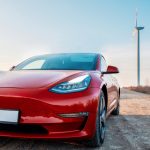

On a busy December day, Tesla’s Full Self-Driving (FSD) technology faced rigorous examination on South Korean highways, bringing both opportunities and challenges into focus for autonomous vehicle deployment. The Korea Expressway Corporation conducted the test across various operational contexts, exploring how FSD interacts with real traffic patterns and urban infrastructure. While the advanced driver-assistance system has attracted global attention and stirred ongoing debate about safety and regulation, the latest results provide fresh data points that may influence perspectives on its future role in the automotive landscape.
Reports from earlier autonomous driving demonstrations in South Korea typically centered on driver-initiated interventions and were conducted on closed courses rather than live highways. Assessments often highlighted sensor or mapping hurdles in mixed traffic environments. However, the most recent public road evaluation allowed the technology to show progress in actual driving conditions, collecting varied feedback beyond just technical performance. This recent approach stands out for combining inner-city and long-distance highway scenarios, setting a new reference point for rigorous testing in the country.
How Did Tesla FSD Perform During the South Korean Test?
The Korea Expressway Corporation tasked FSD to navigate highways such as Gyeongbu and Cheonan, as well as busy city centers like Daejeon Metropolitan City. The team assessed all driving modes—from the conservative “Sloth” to the aggressive “Mad Max”—to understand how the system adapts to diverse driving environments and user preferences. Reviewers noted FSD’s proficiency in managing lane changes, merges, and overtaking maneuvers under real-world traffic, with few situations requiring human intervention.
What Challenges Remain for Tesla’s FSD in South Korea?
Despite the system’s overall stability, testers observed that FSD sometimes strayed into bus-only lanes or surpassed speed limits, particularly when operating in modes above the standard setting. The recorded behavior suggested that FSD prioritized matching the pace of surrounding vehicles over strict adherence to traffic rules during certain phases of the trial. According to a spokesperson for Korea Expressway Corporation,
“We found FSD provides a level of automation that surpasses most general human drivers in many conditions.”
However, issues around local regulations and fine-tuning remain.
What Feedback Have Testers Offered Tesla for Further Improvements?
Based on their experience, the South Korean experts recommend software updates to better distinguish and comply with local lane rules and speed restrictions. They point out that refining these areas would be crucial for broad acceptance and legal approval. Tesla responded to the evaluation, stating,
“We value these insights as we continue to improve FSD for global markets.”
The report encourages collaboration between government agencies and automakers to ensure advanced features address not only performance, but also regulatory compatibility and public safety concerns.
By focusing on imported Model S and Model X vehicles, the test excluded Model 3 and Model Y, which make up most of Tesla’s presence in South Korea. This decision reflects ongoing technology transfer and regulatory nuances, as only select models currently support FSD locally. The findings open up discussion on how rapidly expanding FSD may become available for a broader consumer base, and how these real-world results could influence future rollout decisions. The report’s observations, particularly on adherence to country-specific driving rules, highlight a consistent global challenge for autonomous driving systems: the need for nuanced, region-specific adaptation.
Precise feedback from national highway authorities like Korea Expressway Corporation has proven critical in steering the future development of advanced driver-assistance systems. For readers interested in self-driving technology, these test results offer valuable insight into both the strides and remaining hurdles for full autonomy. As similar evaluations occur worldwide, it becomes clear that achieving regulatory harmony, public acceptance, and technical reliability are ongoing processes. South Korea’s comprehensive test reinforces the growing influence of transparent, real-world validation over simulated or laboratory results. Such open feedback loops may ultimately accelerate the pace at which solutions like Tesla FSD become mainstream, provided persistent regional challenges are addressed and updated through collaborative improvements. For those watching the evolution of autonomous vehicles, keeping an eye on both performance and policy remains essential for understanding where the sector heads next.