

Tesla has entered a new phase in its pursuit of fully driverless ride-hailing, initiating unsupervised Robotaxi testing in Austin and planning launches in five additional U.S. cities. The company views this expansion as a critical step to broaden access, but industry watchers emphasize that successful scaling relies less on geographic spread and more on swift, sustainable deployment. Many policymakers, commuters, and competitors are closely watching how quickly Tesla’s promise of autonomously operated Model Y vehicles can translate into a viable, widely available transportation option.
Other reports from earlier this year highlighted Tesla’s initial testing in the Bay Area and Austin with safety drivers still present. Now, Tesla is removing those human supervisors, a shift that signals progress beyond trials by companies like Waymo and Cruise, which also faced regulatory scrutiny in their early driverless stages. However, scaling up from pilot programs to city-wide operations has remained a major challenge industry-wide. Tesla appears focused on accelerating this shift to driver-absent vehicles, while analysts continue to observe growth and safety metrics.
What Determines Robotaxi Success Now?
Investor attention has shifted from regional expansion to the pace at which Tesla can advance its driverless fleets, according to Mark Delaney from Goldman Sachs. Delaney regards the ability to scale operations and achieve profitability as key factors, distinguishing Tesla’s next moves from its past emphasis on hardware and software improvements. He explains,
“We think the key focus from here will be how fast Tesla can scale driverless operations…and on profitability.”
How Are the Latest Tests Progressing?
This week, by removing all human monitors from Model Y vehicles in Austin, Tesla demonstrated a major development in unsupervised driving. These tests mark the company’s first instances of completely empty Robotaxi rides on public roads in its pilot city. CEO Elon Musk has reiterated his intention to remove Safety Monitors since 2023, a step he recently confirmed:
“Tesla had officially removed vehicle occupants and started testing truly unsupervised rides.”
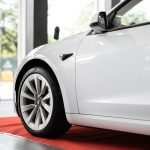
The Model Y units were spotted operating in urban areas with no one inside, meeting one of Tesla’s prerequisites before broader fleet expansion.
What Hurdles Remain for Wider Rollout?
Key challenges ahead for Tesla involve ensuring safety without human intervention and meeting regulatory requirements in new cities. While human Safety Monitors previously retained emergency override capabilities in Austin, their removal shifts the responsibility entirely onto Tesla’s autonomous systems. As Tesla seeks to replicate the driverless tests in Houston, Dallas, Miami, Las Vegas, and Phoenix, its technology’s reliability and acceptance by local authorities will be crucial for the next phase of deployment.
Tesla’s driverless push places the company at the forefront of autonomous mobility trials, but also exposes it to close scrutiny from investors and regulators. The industry’s prior experience, especially with other companies, has shown that technical achievement does not automatically lead to rapid or profitable expansion. Tesla’s focus on the tempo of operational rollout, rather than just the number of cities served, reflects lessons learned from earlier endeavors by both itself and competitors. For those tracking autonomous vehicle progress, Tesla’s Robotaxi rollout serves as a monitoring point for how swiftly large-scale adoption might actually materialize. Consumers and urban planners can anticipate that as cities adapt, factors like public trust, legal permissions, and operational efficiency will determine when and how these services become widespread.