
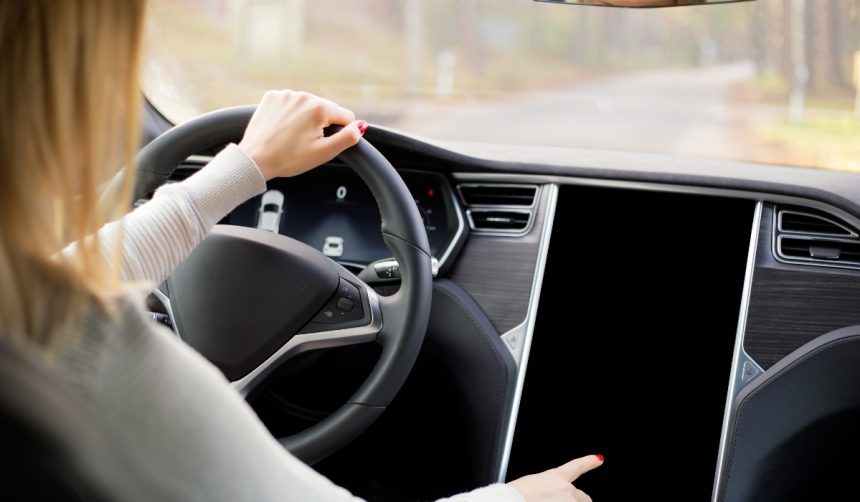
Tesla’s Full Self-Driving (Supervised) has taken another step in advanced mobility by now being able to recognize and react to hand signals from people on the road. This capability, recently confirmed by CEO Elon Musk, was demonstrated through social media clips showing Tesla vehicles accurately interpreting and responding to gestures given by traffic controllers. As self-driving technology integrates further into daily life, responsiveness to non-verbal cues like hand signals addresses a critical gap in vehicle autonomy, potentially improving the flow and safety of mixed human-automated traffic environments. This feature could also help ease concerns among some drivers and pedestrians about the adaptability and awareness of automated vehicles.

Earlier reports about Tesla’s autonomous systems focused heavily on improvements in vision-based navigation and emergency response but did not mention nuanced human interactions such as hand gesture recognition. Discussions online often raised concerns about the ability of autonomous systems to interpret the intent of human actors in roadwork or unusual traffic scenarios. This newly publicized feature appears to be Tesla’s response to such critiques, indicating a broader push to make its Full Self-Driving (Supervised) more attuned to real-world complexities and interactions with people outside vehicles. Frequent updates to the system demonstrate a move toward bridging the gap between automated decisions and unpredictable human behavior on roads.
How is Hand Signal Recognition Used on the Road?
Interpreting hand signals is an essential part of navigating urban areas, construction zones, and situations where standardized signals may not apply. Tesla’s Full Self-Driving (Supervised) addresses this need by using its cameras and AI to discern when a person is giving non-verbal traffic instructions, such as stopping, yielding, or proceeding. This function is particularly useful when interacting with construction workers, parking attendants, or any pedestrians taking a role in directing vehicles, offering the potential to reduce confusion and mishaps during such events.
What Is Driving the Increase in FSD Supervised Mileage?
Tesla owners continue to log more miles using the Full Self-Driving (Supervised) system each year. The cumulative mileage surpassed 8 billion, with the rate of adoption accelerating—over a billion miles were registered within the first two months of 2026. This leap can be credited in part to the expanding feature set, such as gesture recognition. As more drivers use FSD (Supervised) for everyday commutes, Tesla collects valuable data that contributes to refining the system’s response to a wider variety of situations. Elon Musk noted,
“Tesla owners have now driven >8 billion miles on FSD Supervised.”
How Does FSD Supervised Compare on Safety?
Tesla’s safety data suggests that vehicles operating on FSD (Supervised) experience fewer major collisions per mile than the U.S. national average. For the most recent reporting period, major collisions occurred once every 5.3 million miles for Tesla’s FSD-equipped vehicles, while the broader U.S. average was one every 660,000 miles. These statistics provide context for how the company’s ongoing improvements might impact not just convenience but also road safety outcomes. Tesla has pointed out the importance of these results, stating,
“Our commitment is to make roads safer for everyone with each software update.”
As Tesla’s Full Self-Driving (Supervised) continues to add features like hand signal recognition, the company addresses one of the core challenges of integrating autonomous vehicles into environments designed around human communication. Vehicles capable of understanding hand signals can better navigate complex, dynamic traffic scenarios where conventional signals fall short. An important consideration for readers is that while enhanced perception by the system may improve safety and usability, it still requires regulatory oversight and active supervision. Those following the development of Tesla’s autonomous technology may find it helpful to stay updated on release notes and safety metrics as the system expands. Learning how FSD (Supervised) handles unusual, human-directed traffic patterns could be key for those interested in adopting such technology or sharing the road with autonomous vehicles.