
Innovation in autonomous driving continues to accelerate as leading automakers push the boundaries of software and hardware integration. During a recent trip to Silicon Valley, Xpeng CEO He Xiaopeng revisited Tesla’s Full Self-Driving (FSD) technology and shared candid impressions about its progress and implications for the industry. Traveling through both Silicon Valley and San Francisco, He examined Tesla’s advancements firsthand while mapping out Xpeng’s own path forward within China’s competitive smart vehicle landscape. Industry observers note that such insights contribute to shaping investor expectations and future product strategies across global electric vehicle brands.
Similar reports from past years highlighted distinctions between Tesla and Waymo when navigating city environments. Observers remarked that He Xiaopeng previously found Waymo to be more adept at urban maneuvers, while Tesla’s FSD performed well on highways and less dense areas. Now, the focus shifts to improvements in Tesla’s approach, with the broader industry monitoring how Xpeng’s own VLA system will adapt and compete. Earlier coverage emphasized more cautious optimism about Tesla’s readiness for higher levels of autonomy, whereas recent tests suggest performance has noticeably advanced.
What Impressed He Xiaopeng During Tesla’s Latest FSD Test?
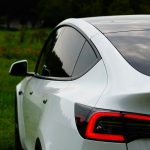
He Xiaopeng spent around five hours testing Tesla’s Full Self-Driving Version 14.2 and rode in a Tesla Robotaxi, observing substantial gains in reliability and driver confidence compared to his previous visit. He commented that the system has evolved past a typical Level 2 advanced driver assistance experience, now feeling much closer to Level 4 in terms of overall capability. The consistency of performance through varied conditions left He with a reinforced belief in the architecture Tesla uses across both private vehicles and robotaxis.
“Tesla’s FSD has clearly made significant strides since my last evaluation,”
He noted after his hands-on assessment.
How Is Xpeng’s VLA System Progressing?
The benchmarking exercise has further motivated Xpeng to strengthen its VLA autonomous driving system. He set a clear target for his team—to reach a level of performance comparable to Tesla’s FSD V14.2 by August 30, 2026. Xpeng is set to introduce its VLA 2.0 software in the next quarter, but He emphasized that this initial version will require additional advancement before matching Tesla’s latest results. Practical demonstrations and honest assessment of current technology form the basis for Xpeng’s drive to close the gap with competitors.
What Stake Does the Challenge Hold for Xpeng’s Team?
Adding a personal element to their technological ambitions, He issued a public incentive and challenge to Xpeng’s autonomous driving group. Should the team meet the ambitious deadline, He promises lighter moments and improved amenities for staff at Xpeng’s Silicon Valley outpost:
“If our team achieves the target by 2026, I’ll personally approve a Chinese-style cafeteria for our local engineers.”
Conversely, the head of the autonomous driving unit undertook a humorous wager to motivate the team should the target be missed.
Industry watchers regard the CEO’s comparison of Tesla FSD, Xpeng VLA, and Waymo as a practical lens on the differing technical philosophies in autonomous driving. Tesla’s unified system aims to rapidly advance towards higher levels of autonomy, whereas others may prioritize specialized urban approaches. Companies pursuing autonomous vehicles must carefully balance regulatory timelines, real-world validation, and safety, with cross-company benchmarking fostering continuous development. Drivers and consumers can expect these competitive efforts to yield systems that gradually lessen the burden of manual driving. For those considering electric vehicles, understanding the distinctions between each brand’s strategy will be valuable as choices expand in coming years.